
Identify the existing pattern
Orange peel, knockdown and hand applied textures create distinct depths and shadow lines. The existing wall should be examined in the actual room lighting before selecting a matching method. When a paint contractor follows the drywall work, define the surface condition being handed over and decide who handles any minor final touch ups.
Allow time before painting
Let a new texture become ready for decoration rather than applying paint onto soft material. The quote should explain whether the next decorating stage is included or left to a painter. If there is a fixed move in date, reserve enough time for the coating stages after drywall work rather than counting only the installation period.
Prepare a sample area
Use a limited trial to compare the scale, distribution and flattening of the proposed finish. Approve the sample before extending the treatment across the entire repaired area. If the completion date matters most, allow for intervals between coats as well as active labor rather than assuming the entire process happens continuously.
Protect surrounding finishes
Mask adjacent materials against sprayed compound and other application debris. The protection plan should cover the actual application area rather than only the original hole. For a wall receiving a decorative covering, provide its preparation requirements early enough for the drywall finish to support that product.
Judge from normal positions
Close inspection of a wet sample is less useful than reviewing the dry finish from ordinary room viewpoints. Include side lighting and the planned paint sheen when deciding whether the result meets the agreed scope. Where the quoted work stops before painting, request a clear description of what remains so the next decorating stage can be priced realistically.
Set realistic blend expectations
Age, paint buildup and irregular original application can limit how closely a patch can blend. A wider wall treatment may be worth discussing if a localized repair remains conspicuous. When damage followed other building work, describe the nearby alterations and the sequence between those changes and the first visible defect.
Blend beyond the patch
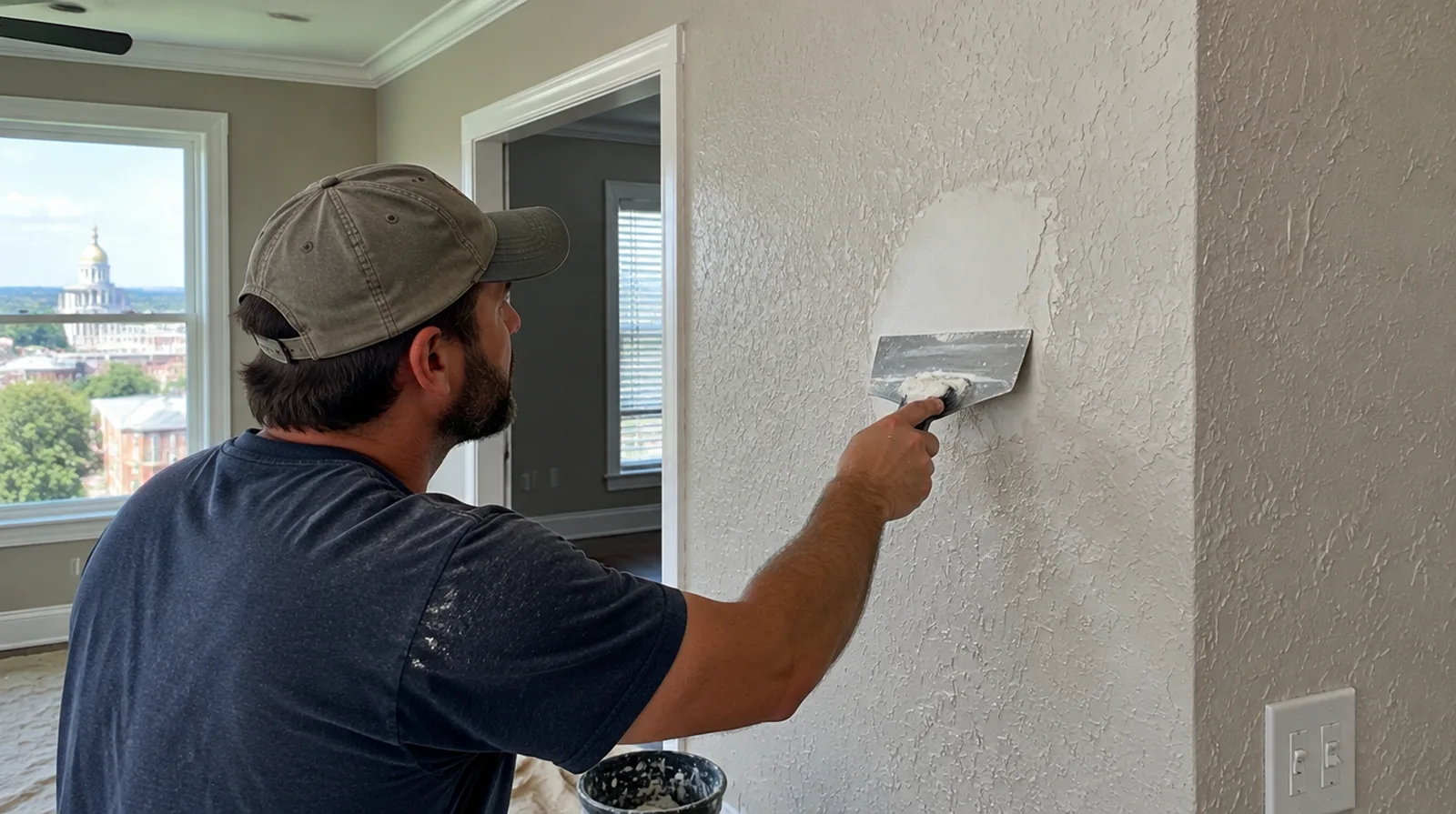
An abrupt rectangular texture boundary often draws attention even when the pattern itself is close. Feathering the application into adjacent sound substrate can soften the transition around the repair. When a wall has repeated defects, keep a record of earlier repair attempts so a new assessment does not simply repeat an unsuccessful approach.
Check the underlying repair
A matching texture cannot hide a raised patch edge or a panel that sits proud of the wall. Complete a stable level repair before trying to reproduce the surrounding texture. For a project with several trades, agree which inspection or handover point must happen before the next person starts work.
Use appropriate primer
A new texture and the painted wall around it can take up paint unevenly. A suitable primer helps the paint system perform consistently without changing the texture profile unnecessarily. When the work area includes a doorway, check the clearance for panel movement as well as the amount of space available for finishing tools.
Study the paint layers
Repeated painting can soften an old pattern and change how its peaks reflect light. Matching the wall as it looks now could call for a distinct application from the pattern that was first installed. When more damage could be hidden, ask how any added scope will be documented before extra material is removed or replaced.
Project context in Macon-Bibb
Measure the separate surfaces and explain which doors need to remain usable while compound dries. Humid summer conditions can influence the interval between coats, while cooler periods may require attention to the room temperature.
Scope questions before finishing
When the protected room includes a doorway, check the clearance for panel movement as well as the amount of space available for finishing tools.
While a removed panel exposes the wall cavity, complete the necessary review of concealed work before replacement board closes the opening.
At a repair beside an opening, allow clearance for moving board through the doorway and space to use the finishing tools effectively.
If access passes through a shared space, arrange protection and a delivery route that do not unnecessarily obstruct other occupants.
When a quote includes multiple visits, ask what happens during each stage and when the interior needs to remain undisturbed between coats.
If a distinct painter completes decoration, agree the condition of the handed over surface and assign responsibility for small final corrections.
For a tightly furnished room, plan temporary storage and the minimum working clearance before material is carried into the property.
If the coating stability is unclear, assess which layers are adequately bonded and which ought to be removed rather than simply hidden beneath new material.
If a household member is sensitive to dust, discuss containment and cleaning expectations before choosing how to stage the room work.
If the finish paint is already chosen, share its sheen and color early because those choices influence how substrate preparation is judged.
For a repair that crosses several surfaces, measure the affected planes separately so the estimate can explain where each finishing treatment starts and stops.
Where the quoted work stops before painting, request a clear description of what remains so the next decorating stage can be priced realistically.
Explore the Macon-Bibb drywall overview for related options, or read the project planning information before arranging the next stage.
More planning details for Macon-Bibb
For a Macon-Bibb interior project, a hallway with several door returns is a useful example of why square footage alone does not describe the labor. Each edge, frame and change of plane affects protection and finishing access. If an older repair has cracked again, share that history before choosing another cosmetic patch.