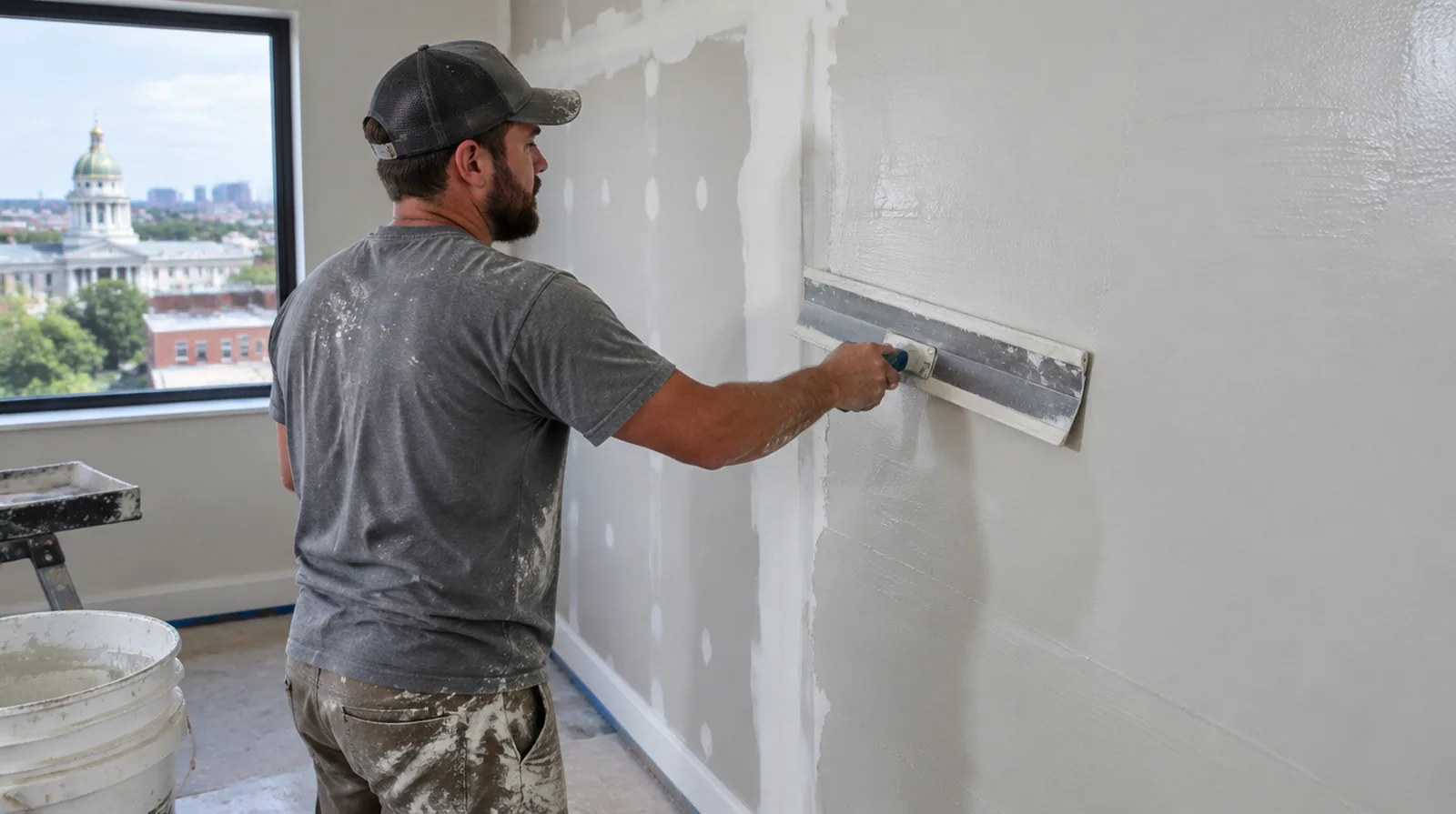
Prime before decoration
The new skim needs compatible priming before its final decorative coatings. Primer helps equalize absorption and may reveal small touch ups that should be resolved before the final coat. For an older repair with no clear history, describe when the mark first appeared and whether it has changed through more than one season.
Check underlying movement
A skim coat improves the surface profile but does not repair structural movement or unstable board. Recurring cracks should be investigated and reinforced appropriately before the finish is covered. If the project is part of a larger remodel, settle the sequence with flooring, trim and cabinet work before setting a final finishing date.
Refine with minimal sanding
Good application reduces the amount of sanding needed to achieve a uniform finish. Dust control should still be planned because broad wall work may create fine airborne particles. When the same defect has returned, share information about previous repair methods so the next assessment can consider why they did not last.
Apply controlled thin layers
Build a refined surface with controlled applications rather than a heavy unsupported deposit. More than one pass may be necessary where the current texture creates deeper low points. If a distinct painter completes decoration, agree the condition of the handed over surface and assign responsibility for small final corrections.
Inspect using side light
A surface can appear even under direct lighting while revealing shallow tool lines from the side. Review the dry wall under the conditions that will matter after the interior is decorated. If the wall work belongs to a broader renovation, coordinate its order with flooring, cabinetry and trim rather than scheduling finishing in isolation.
Let each coat dry
Room temperature, humidity and airflow influence drying interval across a broad coated surface. A rushed next coat can drag or disturb material that has not set up sufficiently. While a removed panel exposes the wall surface cavity, complete the necessary review of concealed work before replacement board closes the opening.
Choose paint with the finish
Higher sheen coatings can emphasize small variations that a matte finish makes less obvious. Discuss the final decorative plan before deciding how extensive the substrate preparation needs to be. At a repair beside an opening, allow clearance for moving board through the doorway and space to use the finishing tools effectively.
Assess the existing coating
A thin new finish depends on the strength of the coating that will remain underneath it. Separate peeling or poorly bonded material from a stable wall that merely needs smoothing. If the original finish is unusual, keep a small reference sample or a close photograph to support the discussion about blending and restoration.
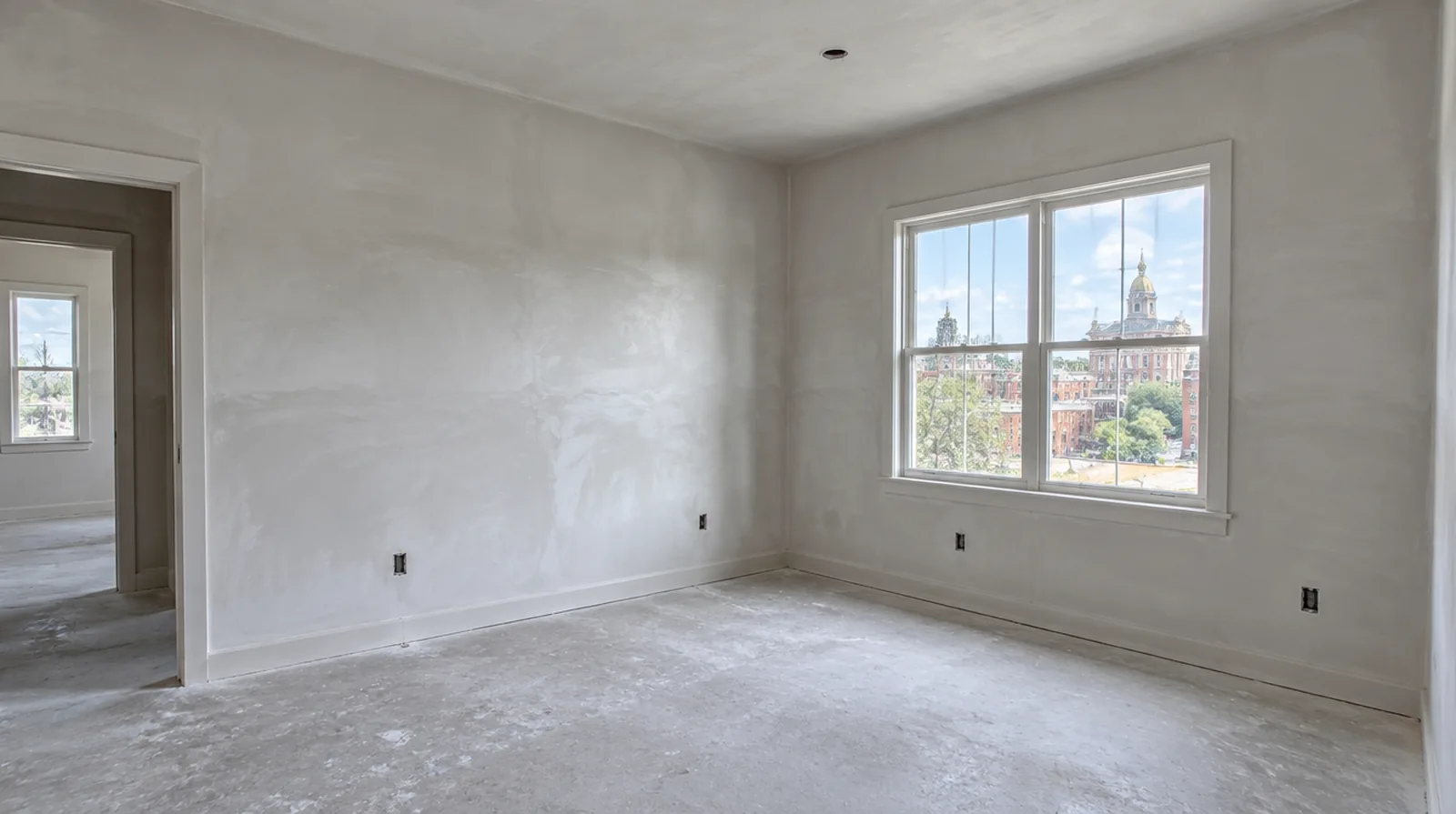
Stabilize torn paper
Wet finishing material can lift damaged paper if the exposed area has not been suitably prepared. Damaged spots need an appropriate sealing approach before the broad finishing coats are applied. If a distinct painter completes decoration, agree the condition of the handed over surface and assign responsibility for small final corrections.
Work around trim carefully
Protect the junctions around frames, baseboards and fittings while planning how the new surface will meet them. Decide whether trim removal is needed or whether a neat stop against it is acceptable. When more damage could be hidden, ask how any added scope will be documented before extra material is removed or replaced.
Project context in Macon-Bibb
For a Macon-Bibb interior project, a hallway with several door returns is a useful example of why square footage alone does not describe the labor. If an older repair has cracked again, share that history before choosing another cosmetic patch.
Scope questions before finishing
For a project with several trades, agree which inspection or handover point must happen before the next person starts work.
When the wall surface has strong reflected light, look at the full plane rather than judging only the narrow strip immediately beside the patch.
At a surface receiving strong window light, review a dried trial from the side in addition to the normal straight view of the wall surface.
Where light reflects along the wall, inspect the complete plane instead of limiting the review to the edge immediately next to the repaired section.
If the final paint is already chosen, share its sheen and color early because those choices influence how preparation of the surface is judged.
While a removed panel exposes the wall cavity, complete the necessary review of concealed work before replacement board closes the opening.
At a ceiling or wall containing fittings, assign removal and reinstatement duties for the affected devices before repair access is needed.
When building management controls access, agree delivery hours and common area protection before committing to a start or finish date.
When the protected room includes a doorway, check the clearance for panel movement as well as the amount of space available for finishing tools.
Where flooring is staying in place, agree on protective coverings and check that tools and material handling will not damage the visible finish.
If the room will remain occupied, identify a workable separation between the protected room and the space that still needs daily access.
At a repair beside an opening, allow clearance for moving board through the doorway and space to use the finishing tools effectively.
Explore the Macon-Bibb drywall overview for related options, or read the project planning information before arranging the next stage.
More planning details for Macon-Bibb
Each edge, frame and change of plane affects protection and finishing access. Measure the separate surfaces and explain which doors need to remain usable while compound dries. Humid summer conditions can influence the interval between coats, while cooler periods may require attention to the room temperature.